Workshop on Withholding Taxes: Compliance & Best Practices
This workshop provides a focused overview of withholding tax obligations under Pakistan’s Income Tax Ordinance. Participants will…
- 0
- 7h
- 0

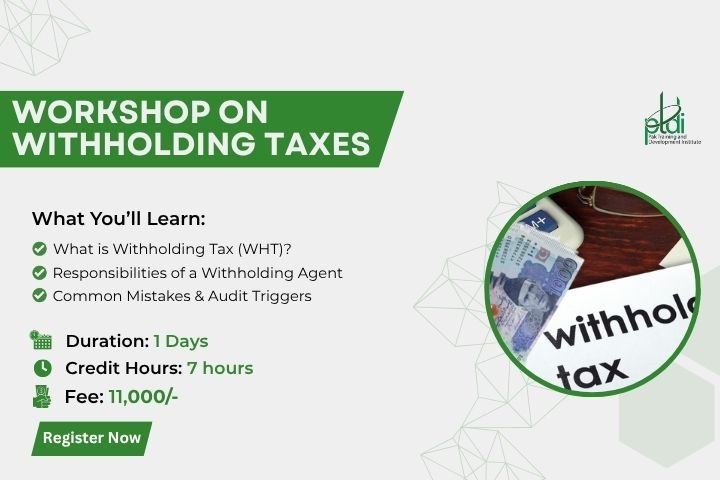
This workshop provides a focused overview of withholding tax obligations under Pakistan’s Income Tax Ordinance. Participants will learn about key sections applicable to different types of payments (e.g., salaries, contracts, services, supplies, rent), filing requirements, challan generation, and real-time challenges in deduction and deposit procedures.
The session also emphasizes risk areas, error avoidance, record-keeping, and documentation practices to ensure compliance and minimize exposure to penalties.
How is this Workshop Helpful?
Withholding tax is a critical area of tax compliance that affects both individuals and organizations. Errors in deduction, deposit, or reporting can lead to audits, penalties, and reputational risks. This workshop equips participants with the knowledge to meet legal obligations confidently and avoid common pitfalls.
What Will You Be Able to Do After Attending?
-
Identify applicable withholding tax sections for various transactions
-
Ensure timely deduction, deposit, and reporting of taxes
-
Understand exemptions, reduced rates, and certificate-related compliance
-
Maintain required documentation for audit readiness
-
Implement best practices and internal controls to reduce compliance risks
What Will You Learn?
- Understand the concept and legal framework of Withholding Tax in Pakistan
- Identify applicable WHT sections based on nature of transaction (e.g., 149, 153, 155, 233)
- Learn when to deduct, at what rate, and how to verify filer/non-filer status
- Use Active Taxpayer List (ATL) and Withholding Tax Cards effectively
- File monthly and annual Withholding Tax Statements (Section 165) via IRIS
- Avoid common WHT errors (wrong rate, incorrect CNIC, late payment)
- Properly deposit deducted tax using PSID and CPR system
- Maintain accurate records for FBR inspections and audits
- Understand penalties for non-compliance and how to mitigate them
- Implement internal controls and best practices for WHT processes
Student Ratings & Reviews

More Courses By Bizcon